The quick backstory: I love sharing
I enjoy borrowing things from friends. And I love lending to them even more. We all have stuff sitting on a shelf that could be out there helping people! When I lend out my darning supplies, or borrow a board game to try it out, it warms my heart.
My sharing activity is limited by my worry that I’d be spamming my group texts, Slack chats, and neighborhood email list. But I know some people in those groups likely have the item I need and would eagerly lend it.
Surely, I thought, there must be some app for this? I looked for a community lending site for years and couldn’t find one that met my needs. There’s the local Buy Nothing group on Facebook but that’s not what I want – it’s massive, unorganized, and I have to go on Facebook.
In 2024 I found myself with free time as I recovered from surgery and began bringing my vision to life. It started off as a proof-of-concept, then took shape with a name, website, and serious functionality. I’ve been using it with friends and it’s finally ready for the world.
Meet Meutch!
I’m excited to unveil Meutch! The name is short for “mutual aid”.
Meutch provides a set of features that don’t exist together anywhere else:
- It accommodates both temporary loans and permanent giveaways.
- You share through circles to people you are socially connected with: your neighborhood, faith community, workplace, etc.
- It’s uncommercialized. No ads, no data tracking, no fees, you don’t need a social media account – just an email address. To my nerds: the code is open-source.
Meutch benefits its users, who save money, avoid storing more things in their homes, and feel good from strengthening ties with people in the communities.
It also has big potential upsides for the world, as it can reduce consumerism (I’ve gotten items faster than I could on Amazon Prime) and build trust and connections at a time when we are atomized.
Let’s take a peek inside
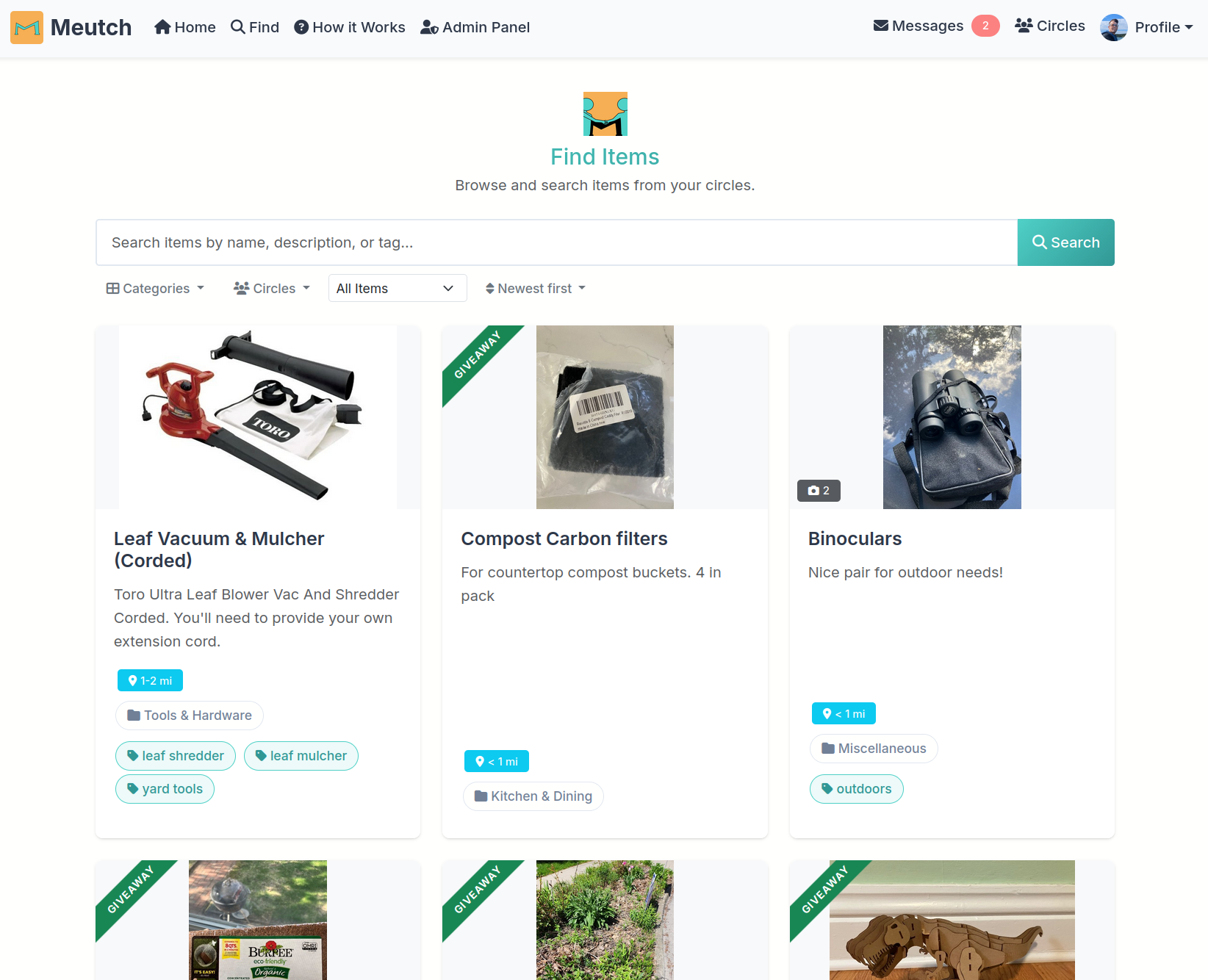
Here’s the home feed of actual real-world sharing activity:
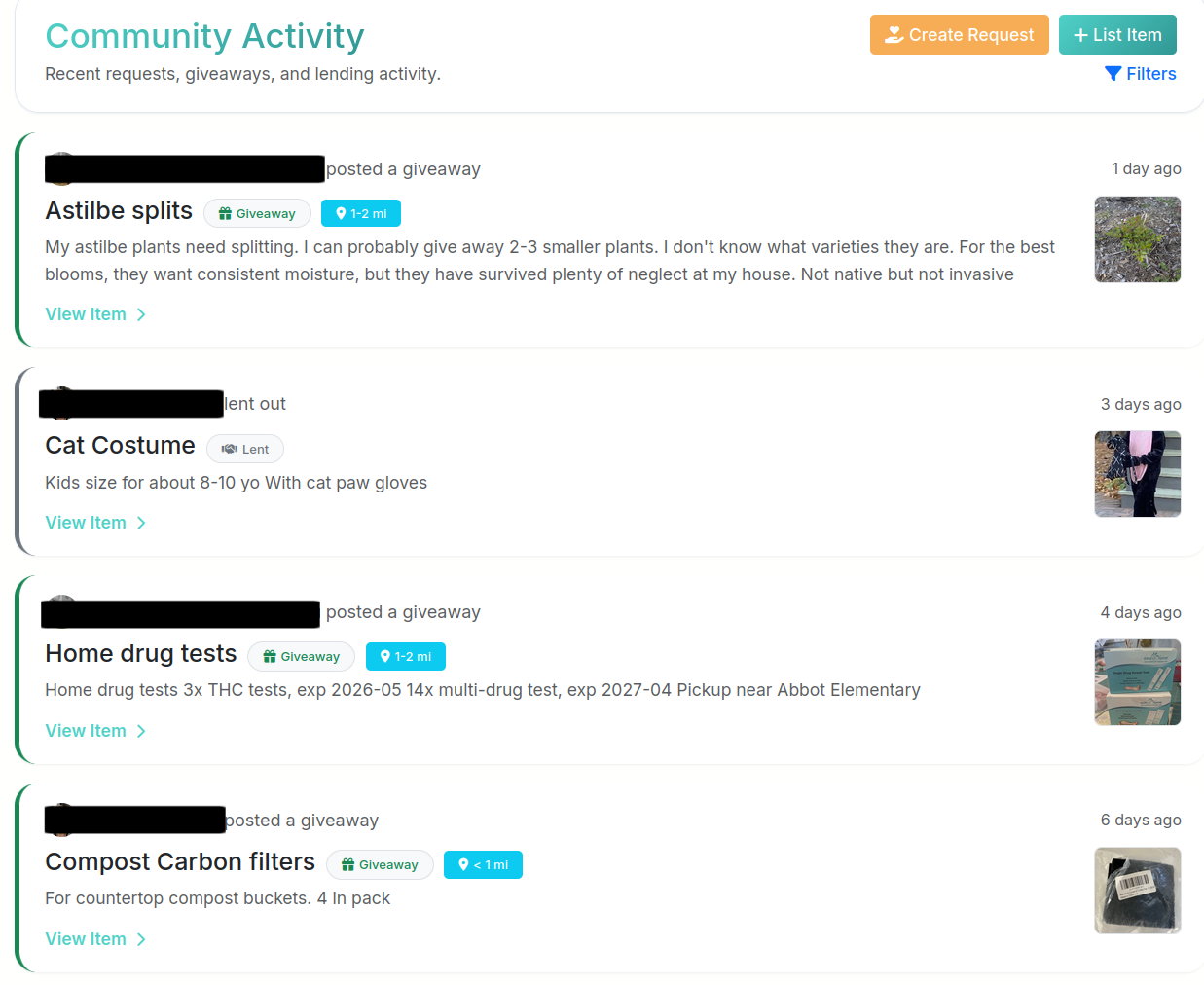
Beyond watching the home feed, you can browse & search items that people in your circles have posted.
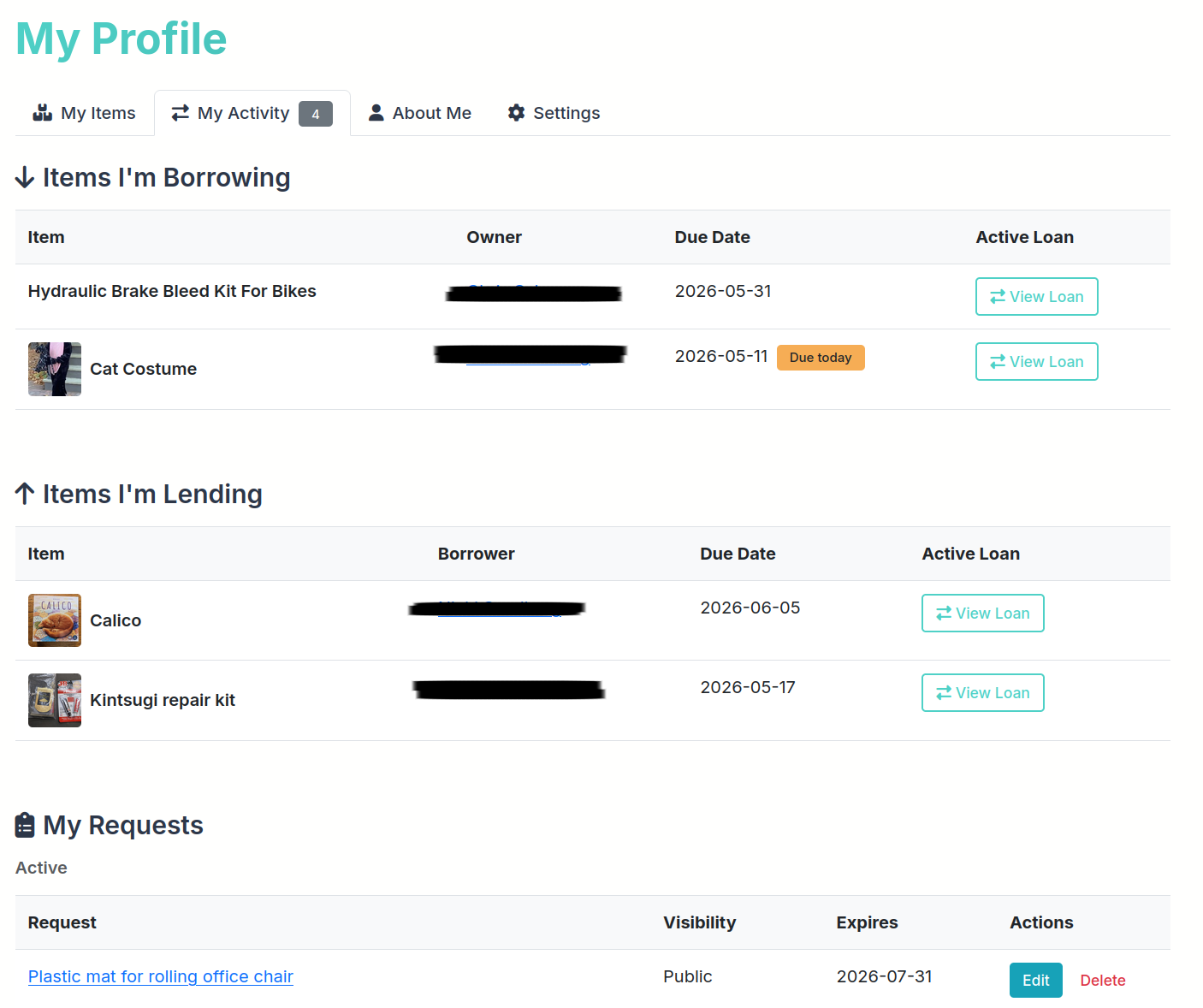
Here’s my current Meutch lending activity (blacking out my friends’ names):
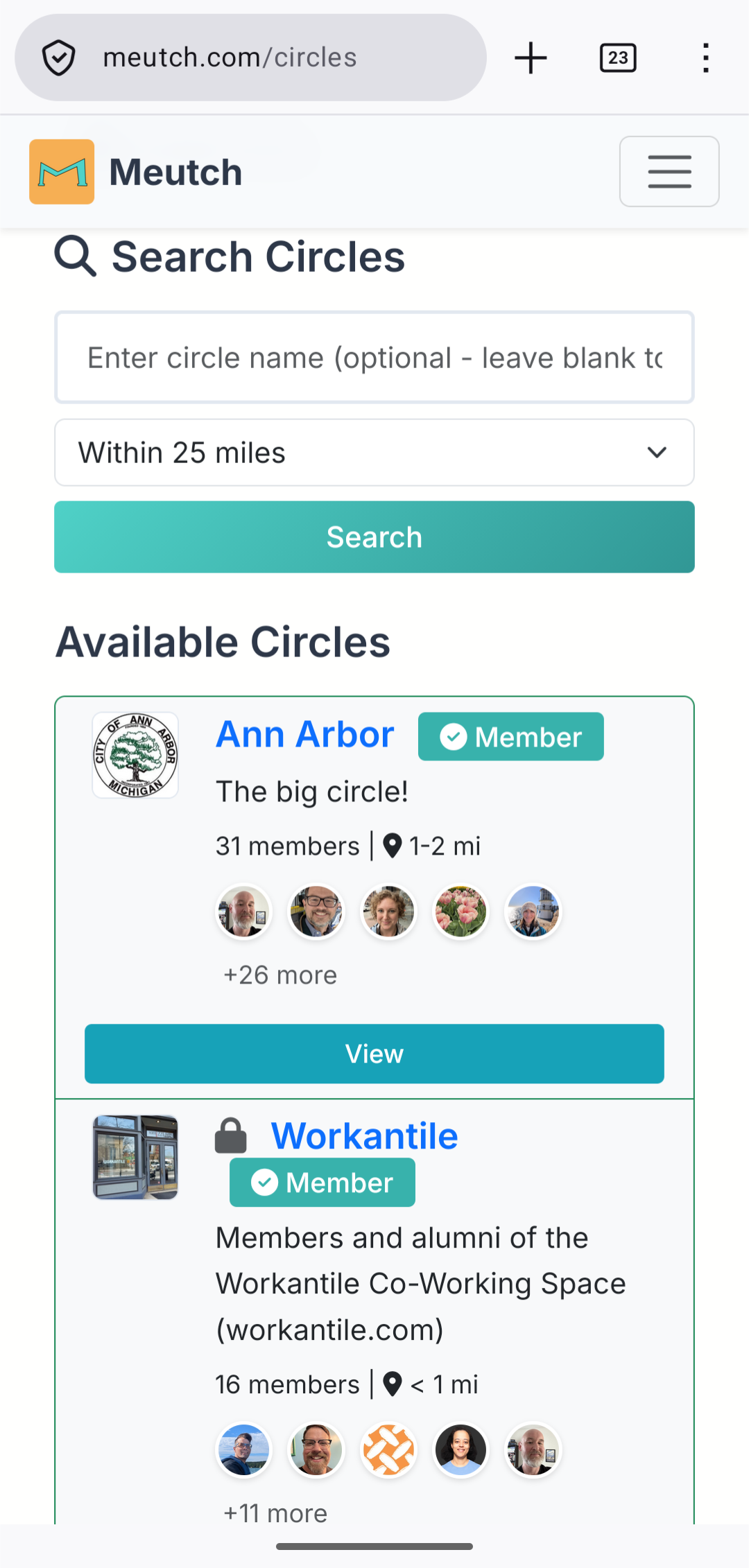
You connect with others by joining circles. These can be public, private (requires approval to join), or even unlisted. This screenshot was taken from my phone; there’s no native app yet, but it works well on a mobile browser.
It has been a delight to use so far. For instance, I wanted to try the boardgame Forbidden Sky; I posted a request and my friend Aaron saw it and lent me his copy. I played it twice and didn’t like it. I won’t buy it. Success!
Since the loan was tracked on Meutch, we got reminders to return it. Those would have been nice for everything I’ve lent over the years and then lost track of.
Here are some things I’ve lent so far:
- Hammer drill and drill bits
- Stockpot for making maple syrup
- Sashiko clothes mending kit
- Azul board game
- Kintsugi ceramics repair kit
- Project Hail Mary book
- Pair of sawhorses
- Balance bike
- Calico board game
- Tarp
- Backpacking equipment
And borrowed:
- Dungeon Crawler Carl Book
- A black cape for Halloween
- Forbidden Sky board game
- A cat costume for my 2nd grader’s “dress up as a book character” day at school
- Tools to perform a hydraulic brake bleed on my bike
I’ve also given away a bunch of objects, ranging from native trees that had reseeded in my garden to a roll of chickenwire.
It’s Go Time
So please: join Meutch! Register, join circles, then post requests and respond to others. Subscribe to the digest emails, ideally daily. Then you can see what people are posting and asking for and engage when you want, instead of needing to regularly visit the site to see activity.
I’ll keep improving Meutch, but it’s time to move from “build the software” to “grow the user base.” This is the hardest part! I need help from everyone I know in Ann Arbor to get to an activity level where people find the platform useful. Once we achieve critical mass, the sky’s the limit.
Yes, “in Ann Arbor” – for now. Meutch works everywhere else, but you’d have to bring your own group to lend with. A board game collective in Seattle could create a circle and start sharing today. I would love to see it happen! And I hope someday to help with outreach in other cities. But for now I’m focused on Ann Arbor, since that’s where my local ties are (I hope an Ypsilanti resident will create a circle for Ypsi).
One tip: I’ve added “share” buttons to circles and public giveaways and requests to spread the word about Meutch. These generate links that render pretty previews to people viewing the links from outside of Meutch.
These links are the best way to share Meutch resources on other social networks. For instance, you could share your request to Nextdoor, create a circle for your neighborhood and send it to the group’s email list, or post a giveaway link to Facebook. You get the attention on your post from those other networks while managing the activity on Meutch.
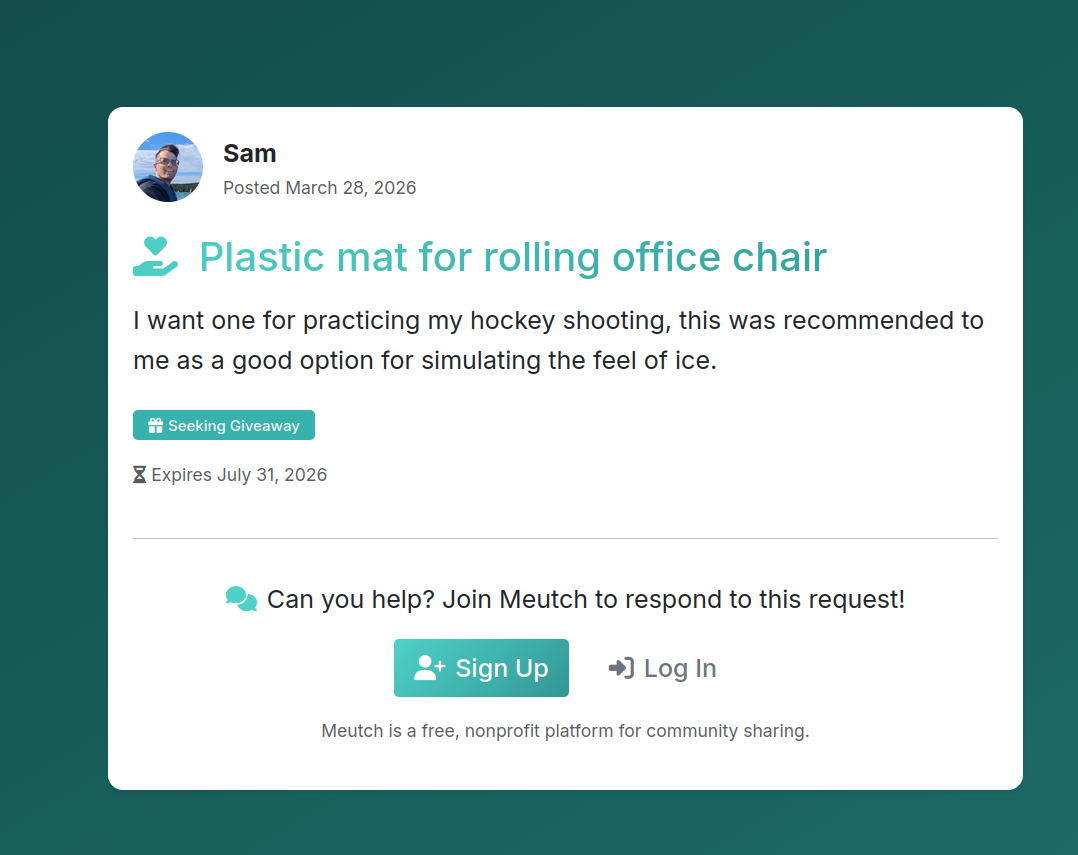
For example, I want a plastic mat for an office chair. Do you have one? The share preview page looks like this:
You can even share temporary links to your own items with people not yet on Meutch. So when someone posted to the Common Cycle email list, “does anyone have a bike repair stand I can borrow?” I was able to send them a link to my bike stand:
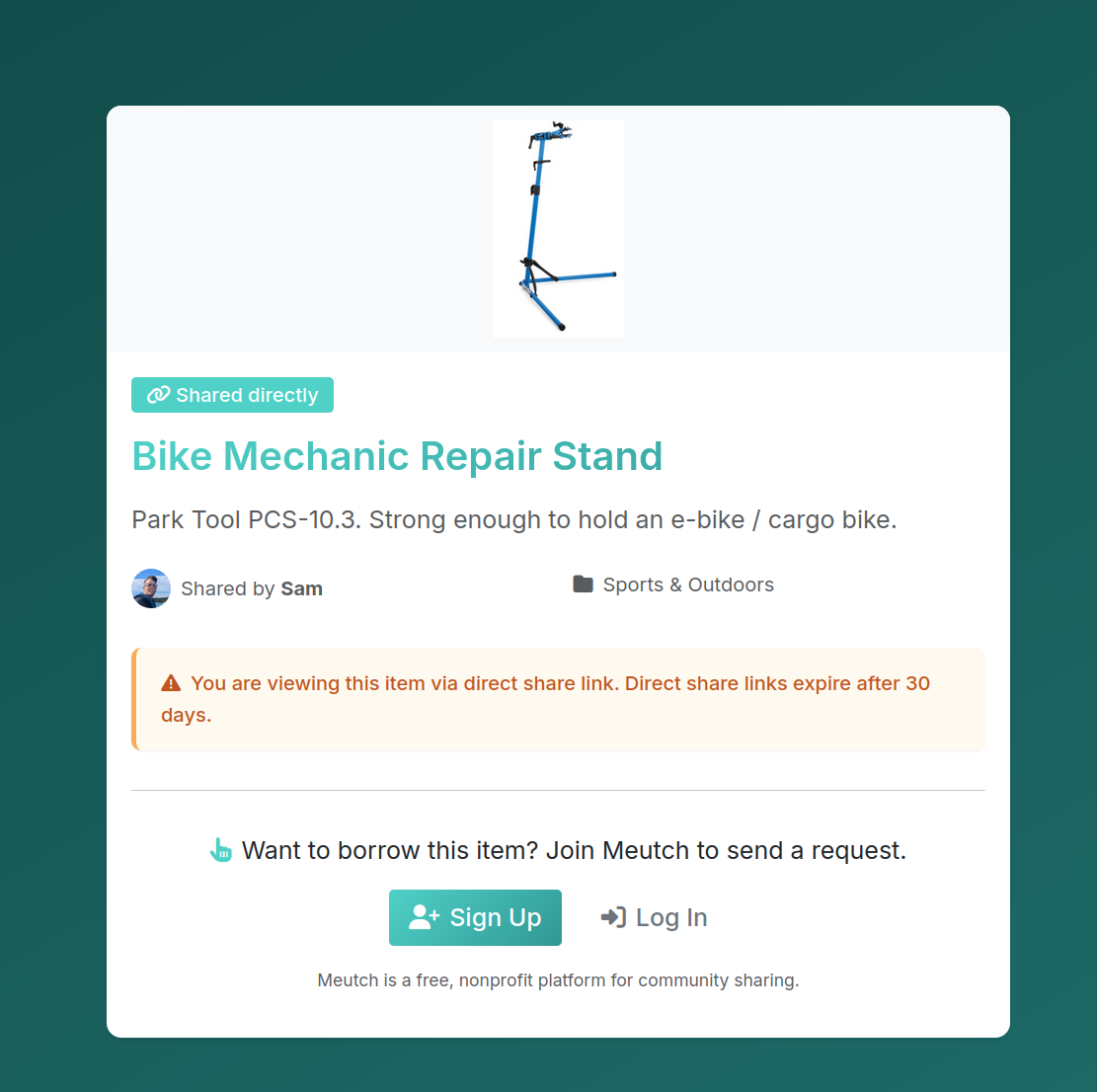
I’ve prioritized privacy in designing Meutch and you would have no way to tell that I have this item listed for loan unless we belonged to a shared circle. This share-link mechanism gives me a way to bypass that briefly for a single item when I want to.
That’s enough of me showing it. Go try Meutch yourself!
I’ll even bribe you! Kind of.
How else can I boost user engagement now? The most common strategies used by new tech companies are off-limits to me. I’m not going to create fake users and upload dummy items, the way Reddit founders populated their site using pseudonyms at its launch. And I can’t offer cash bonuses to active users, the way a startup with millions in venture capital backing can.
Here’s my incentive idea for Meutch: at the start of every month in 2026 I’ll make a donation to a local mutual-aid-type charity of $1 for every user active on Meutch in the prior month, up to $500. “Active” means you:
- Belonged to at least one circle with other people
- Took at least one action: posted a request, added an item, borrowed an item, or responded to someone else’s request or giveaway
This incentive isn’t restricted to people in Ann Arbor. Folks elsewhere might need to recruit a local circle to start sharing with, but I’ll count anyone active, anywhere.
I piloted Meutch in April with some friends from my co-working space. They told others and we got to 17 users who took actions last month. I’ve just donated that much to Common Cycle, Ann Arbor’s community bike repair nonprofit.
Seventeen bucks is measly, I know. I can put Common Cycle back onto the list later. Help me grow that number in the meantime!
My deep gratitude to those of you who share Meutch with your friends and neighbors at this critical early stage. I will be self-promoting Meutch now that it’s officially launched, but your word-of-mouth is much more effective and less awkward. If this project takes root, it’ll be because of you.
See you on Meutch!