Kintsugi is a Japanese technique for visibly repairing pottery. It’s aligned with the aesthetic of wabi-sabi (I still don’t fully understand wabi-sabi despite having enjoyed reading this book about it to my kids). Kintsugi is right up my alley and is similar to sashiko, a visible mending style I’ve come to love.
Traditional Kintsugi is done with ingredients that are hard to work with (urushiol, think poison ivy sap turned into resin) or acquire (gold leaf). And it takes a long time to cure. I looked for a modern equivalent that would provide a shortcut. And I found this comment on Reddit from the appropriately named user Zentactics:
I’ve done it on a few plates and bowls. If the chip is deep, I’ve used painter’s tape to support the JB weld while it cures. Afterwards, I’ll remove it and sand it down to the shape I want it to be. Depending on the chip, it may be easier to layer it, both methods work. Once the JB weld is built up and cured, I’ll put a super thin layer of JB Weld and dust it with gold Alumidust (Alumilite). A brush can be used if needed. I’ll then gently pat it down with my fingertip to embed it. All of the items I’ve fixed have been in the dishwasher and microwave dozens of times and seem to be holding up well.
I followed that approach and it worked great! I’ve repaired a few things but my biggest and favorite repair has been on a large, one-of-a-kind handmade ceramic bowl I’d received as a gift. Here’s the story of that repair and what I learned, with pictures.
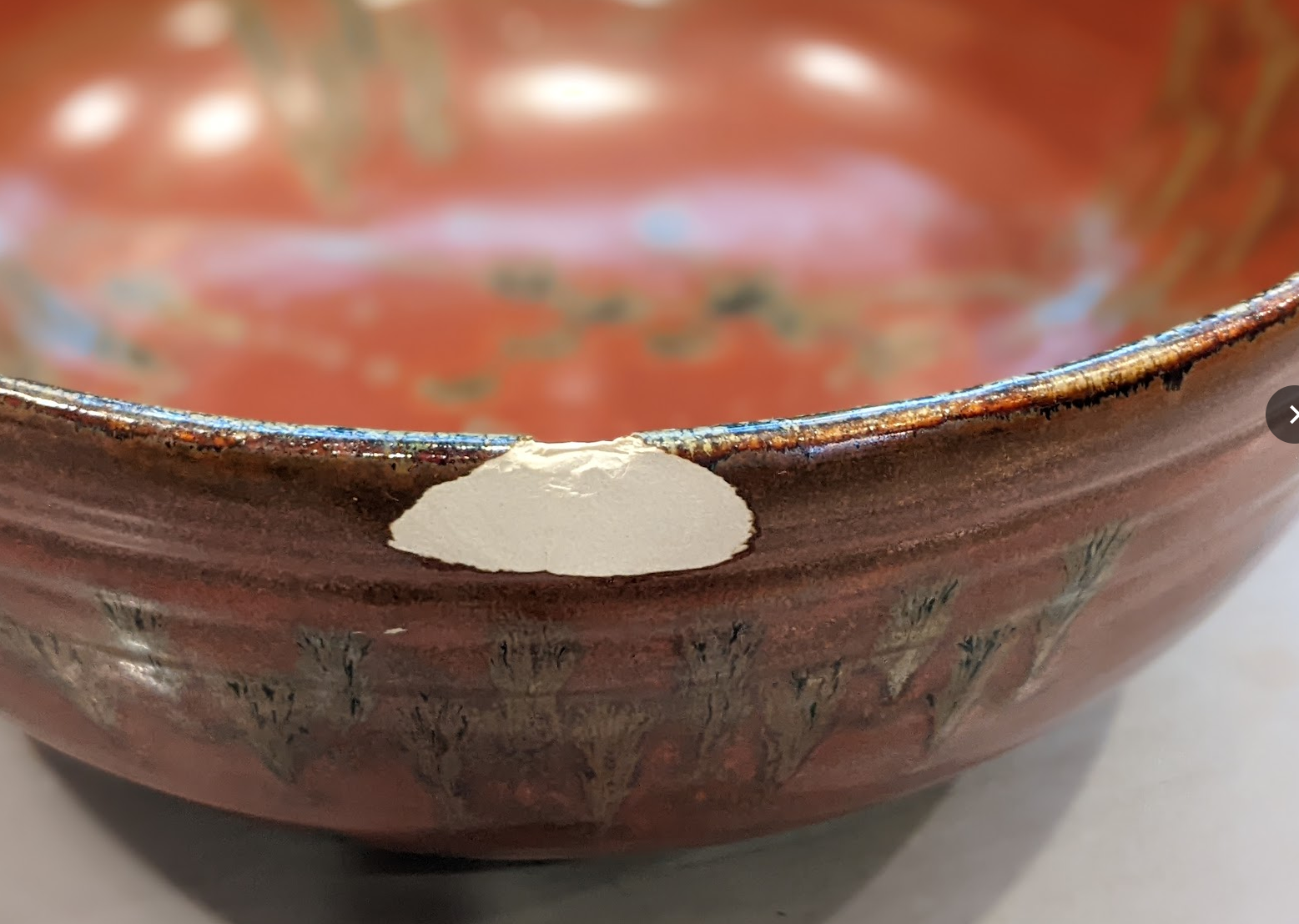
The break: with the bowl sitting on the counter, I reached way up on my tippy-toes to get the hot sauce and bang! The hot sauce toppled off the shelf and crashed into the rim of the bowl:
Notes on materials:
- Some people seem to use the JB Weld SteelStik product but I used the classic two-part epoxy and it worked great.
- Amazingly, from what I can read, both original two-part JB Weld and mica dust seem to be non-toxic when cured.
- That said, I have been hesitant to use JB Weld on a part of a coffee cup that gets submerged under hot liquid. But I feel confident repairing chips in handles and rims that hardly ever come in contact with food.
- For my Michiganders: Alumilite, who manufactures the mica dust I use, is headquartered in Kalamazoo!
- Warning: mica dust gets everywhere! It’s worse than glitter. I work outside when possible.
Okay, onto the repair. I don’t typically have the foresight to take photos but this time I did so I’ll mostly let them speak for themselves.
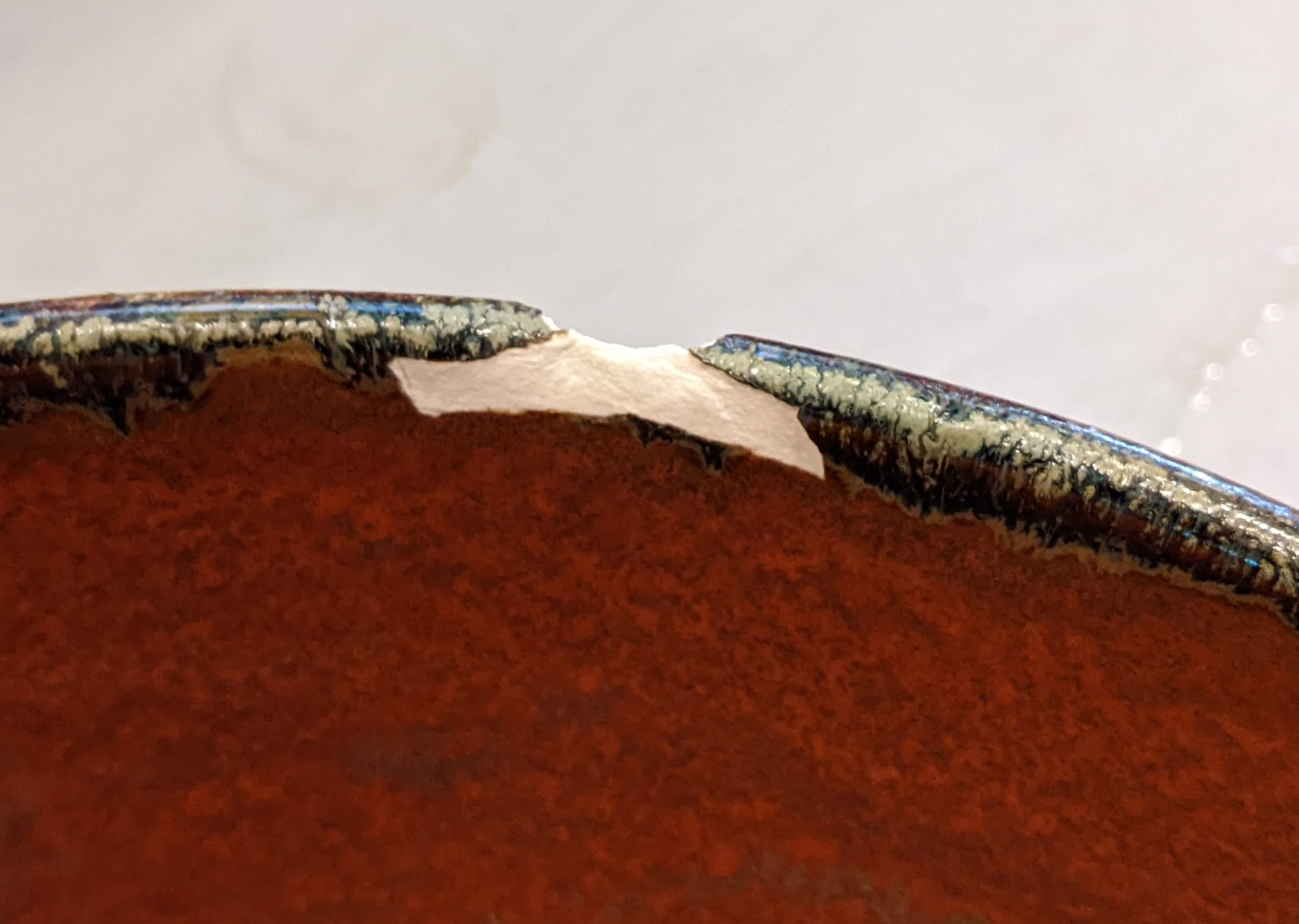
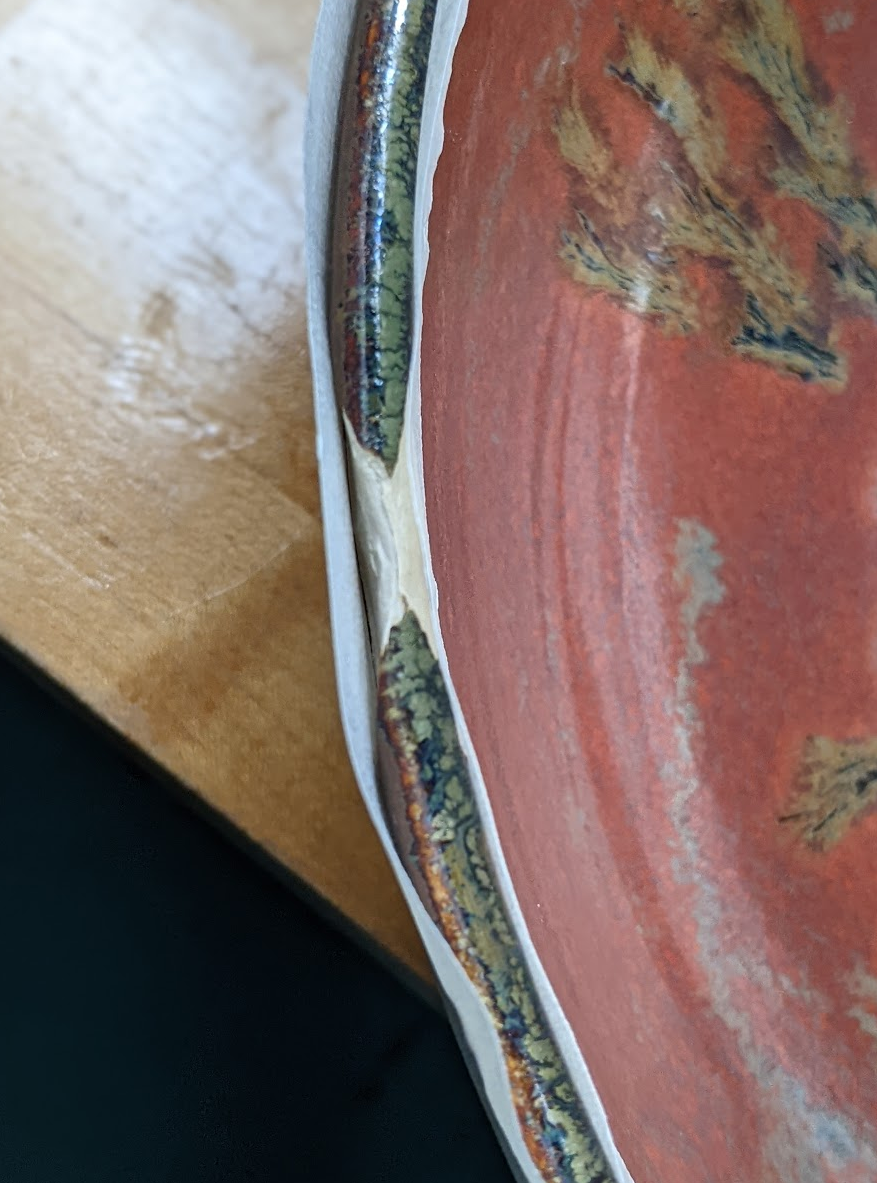
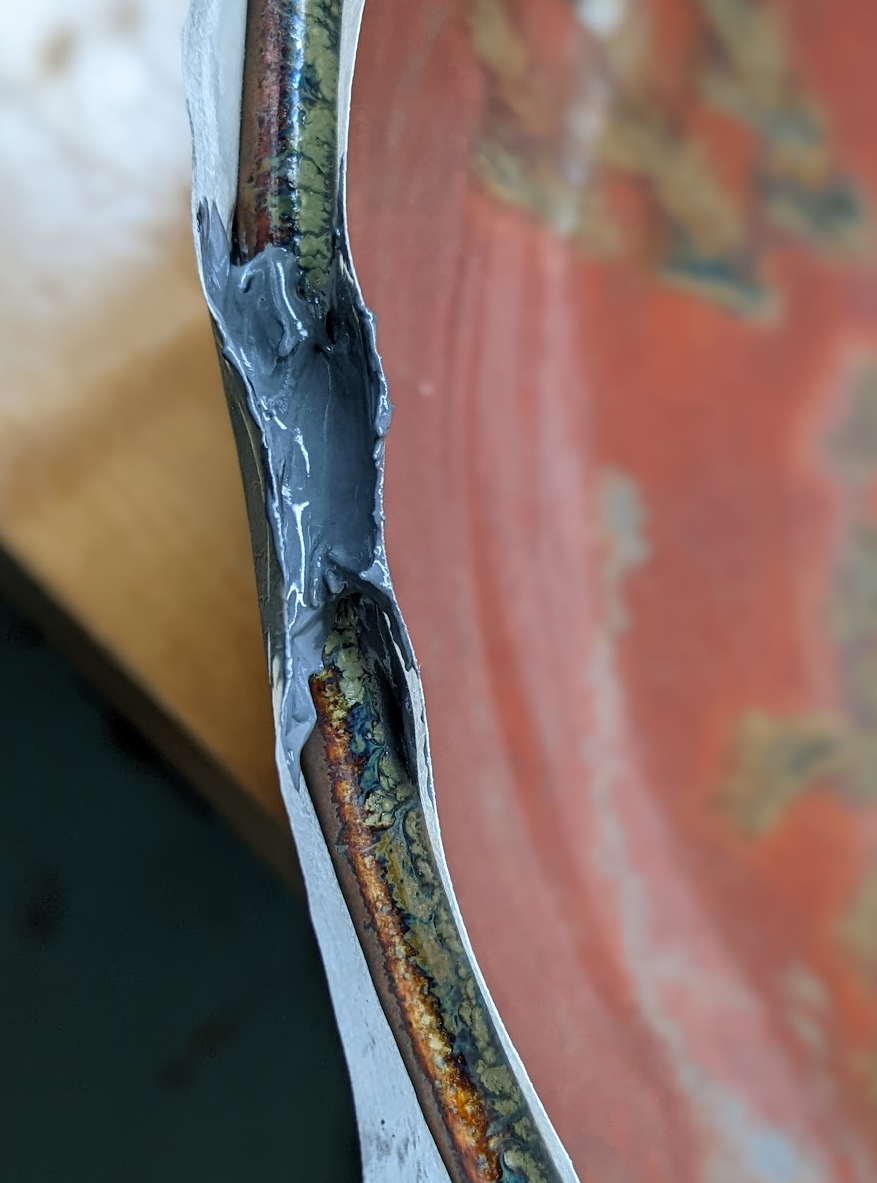
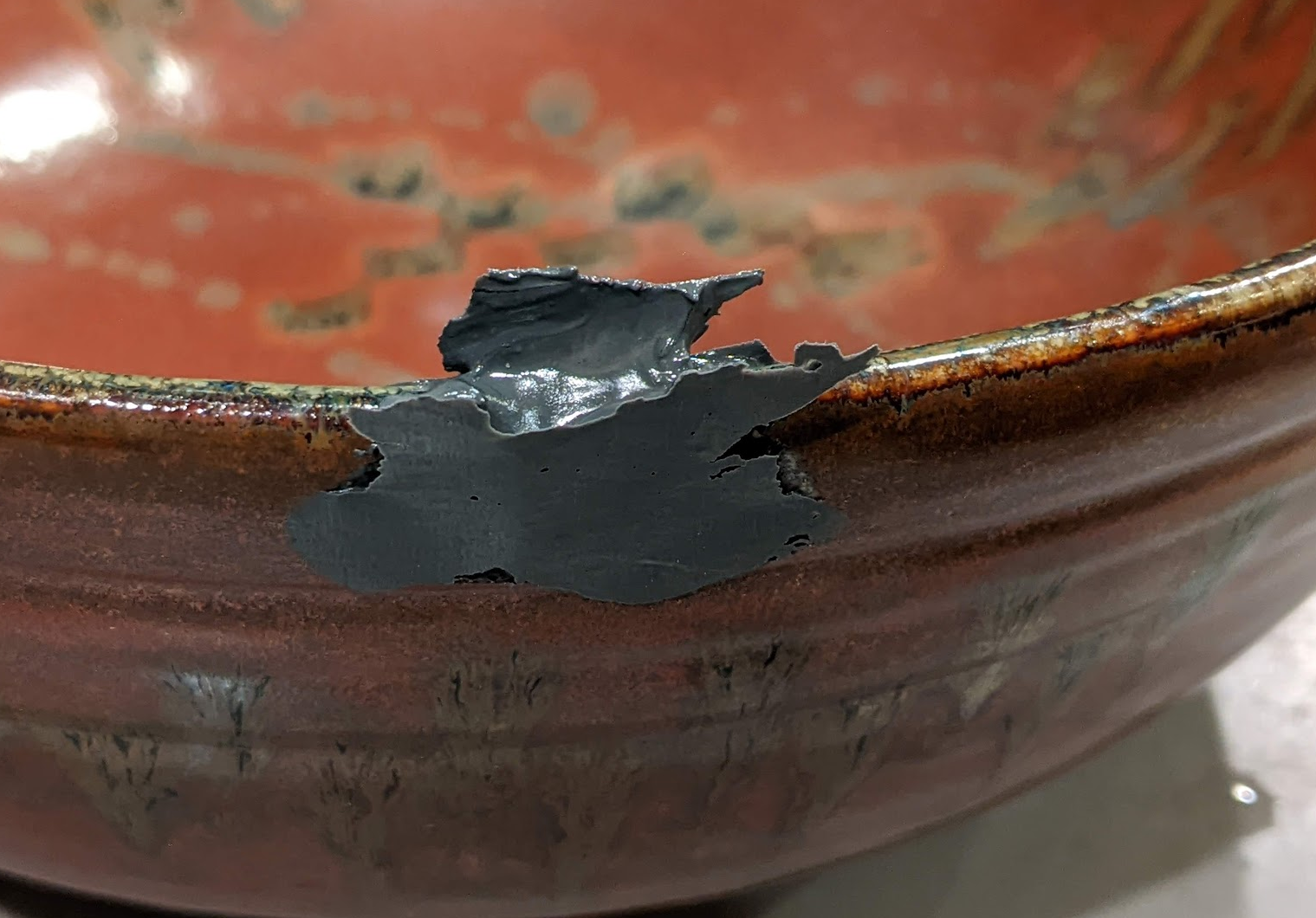
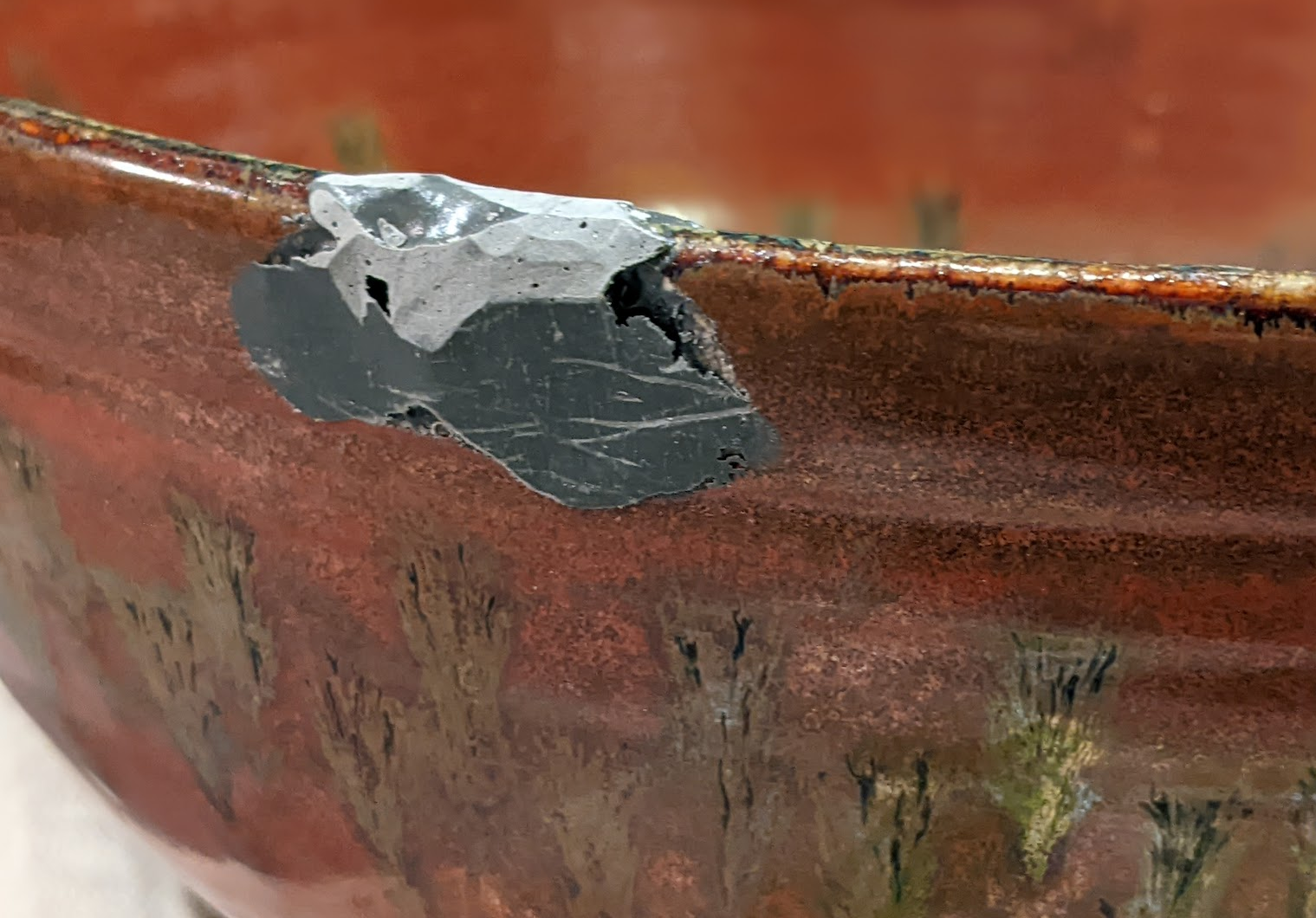
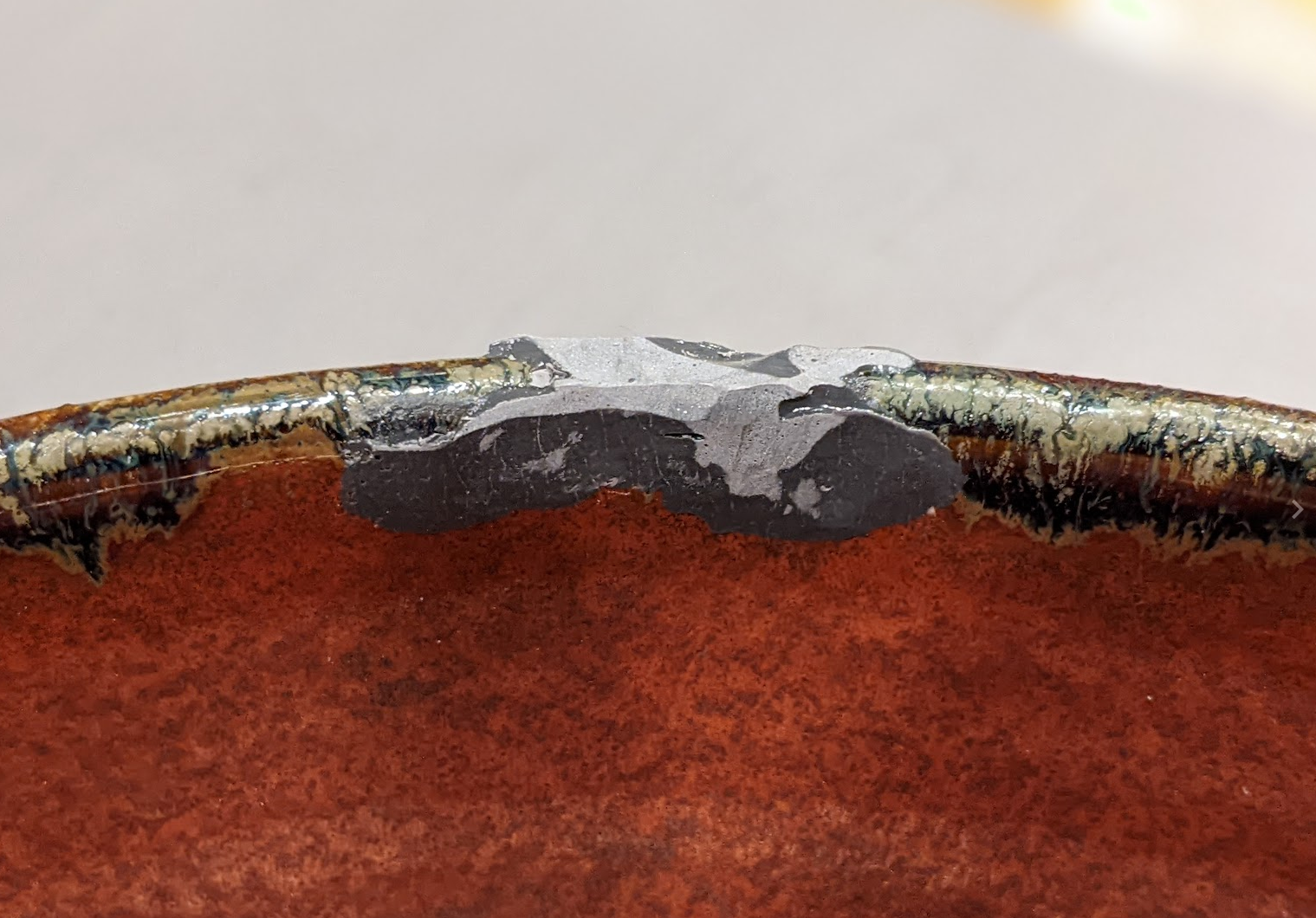
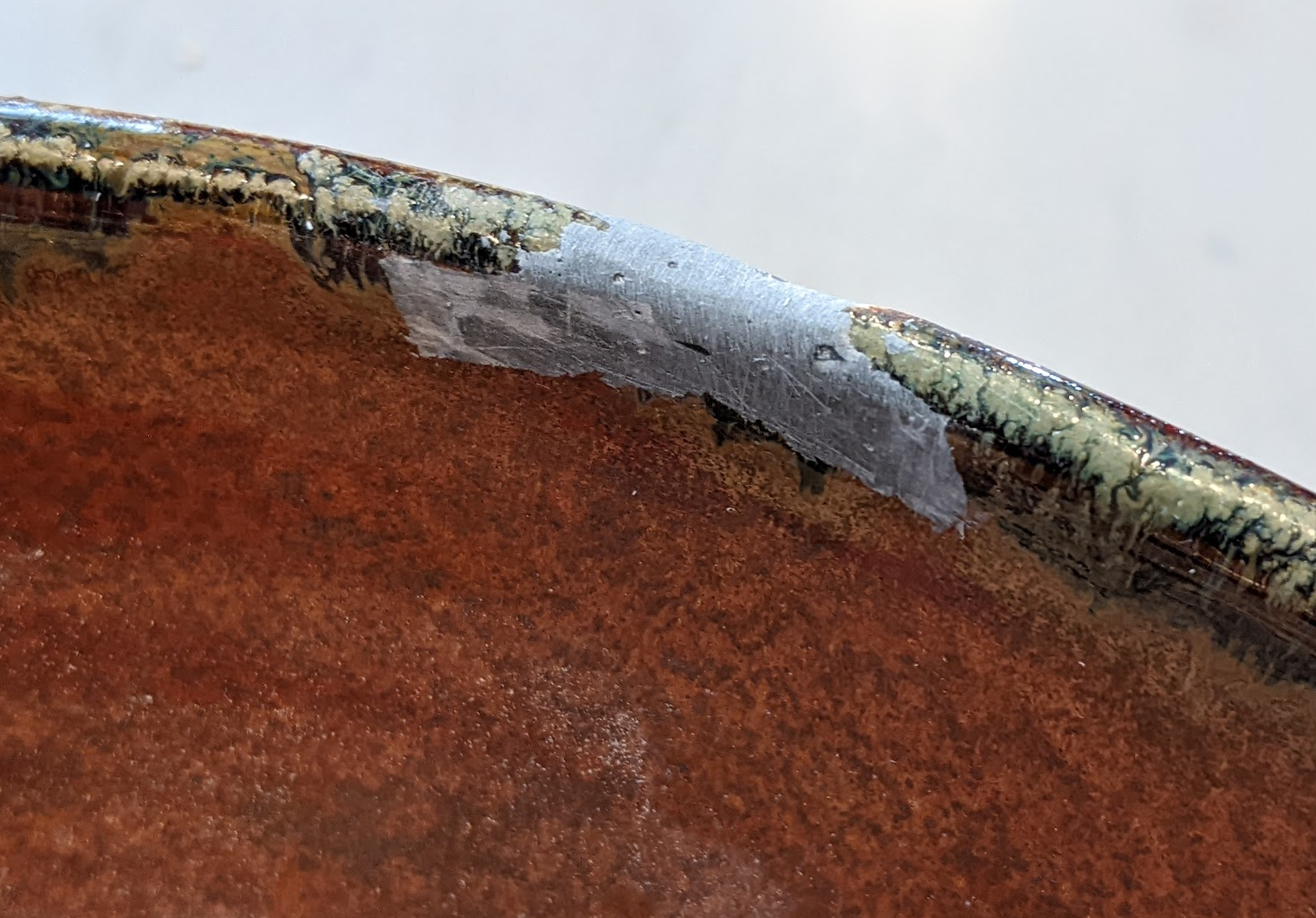
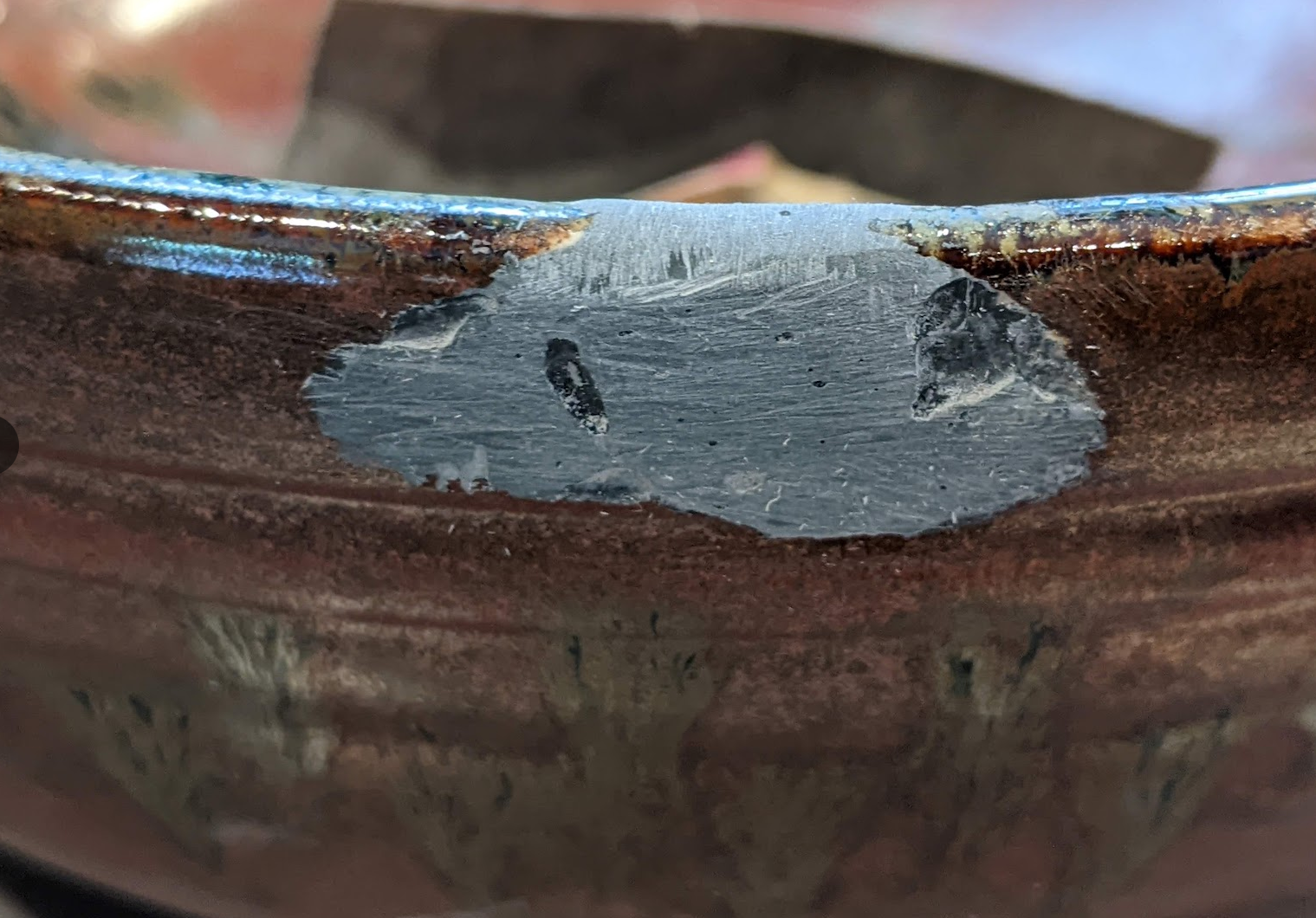
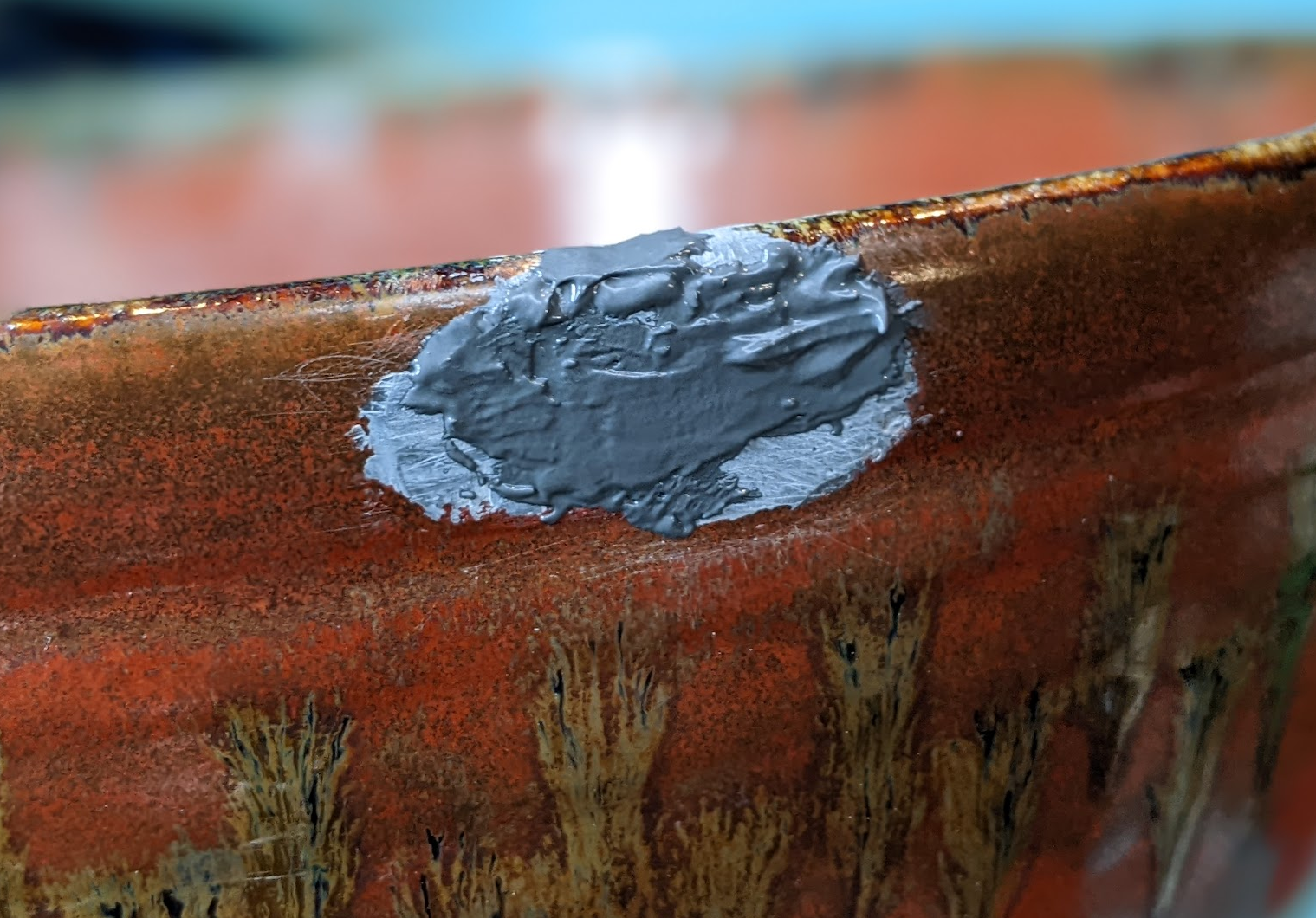
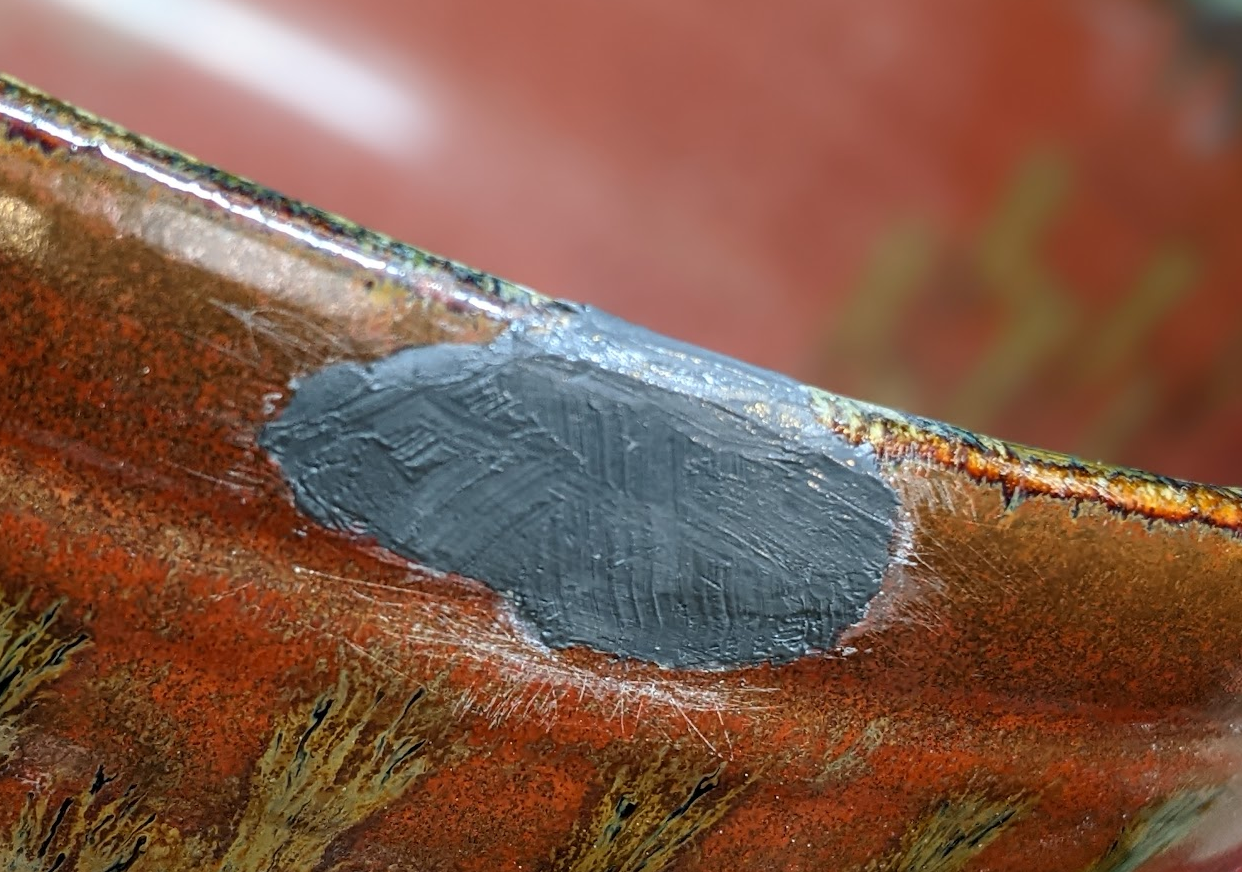
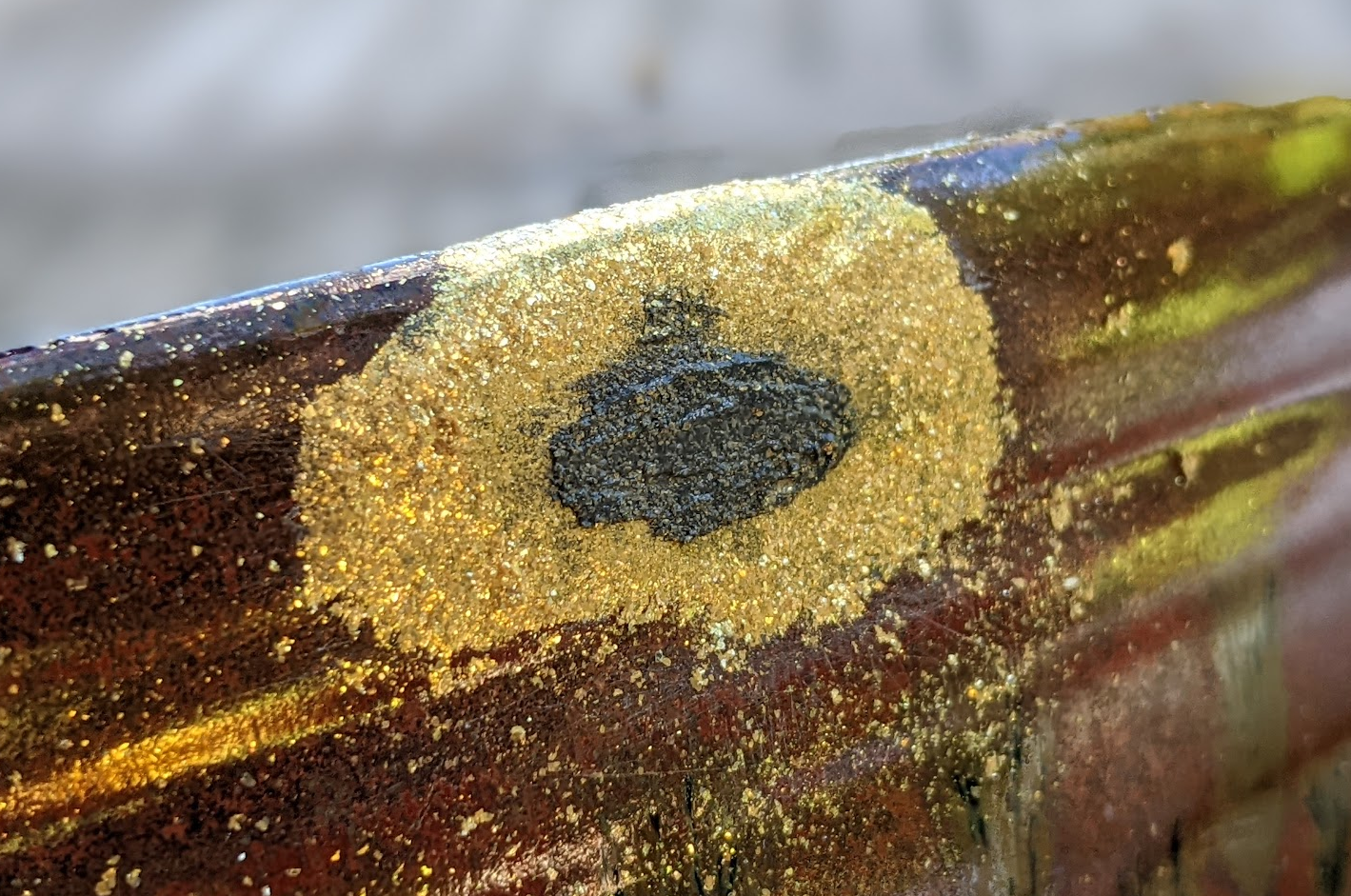
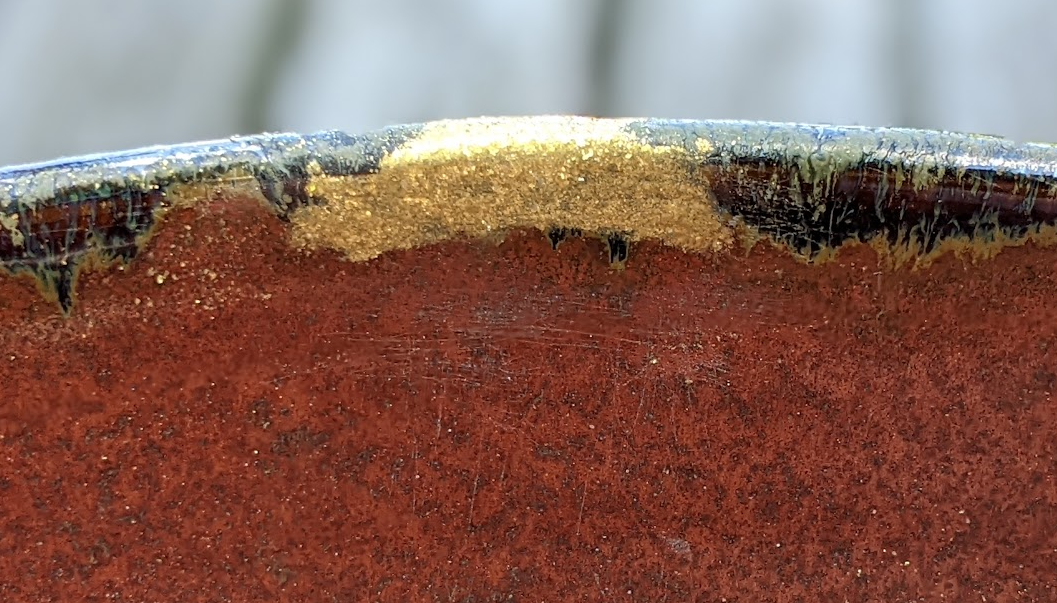
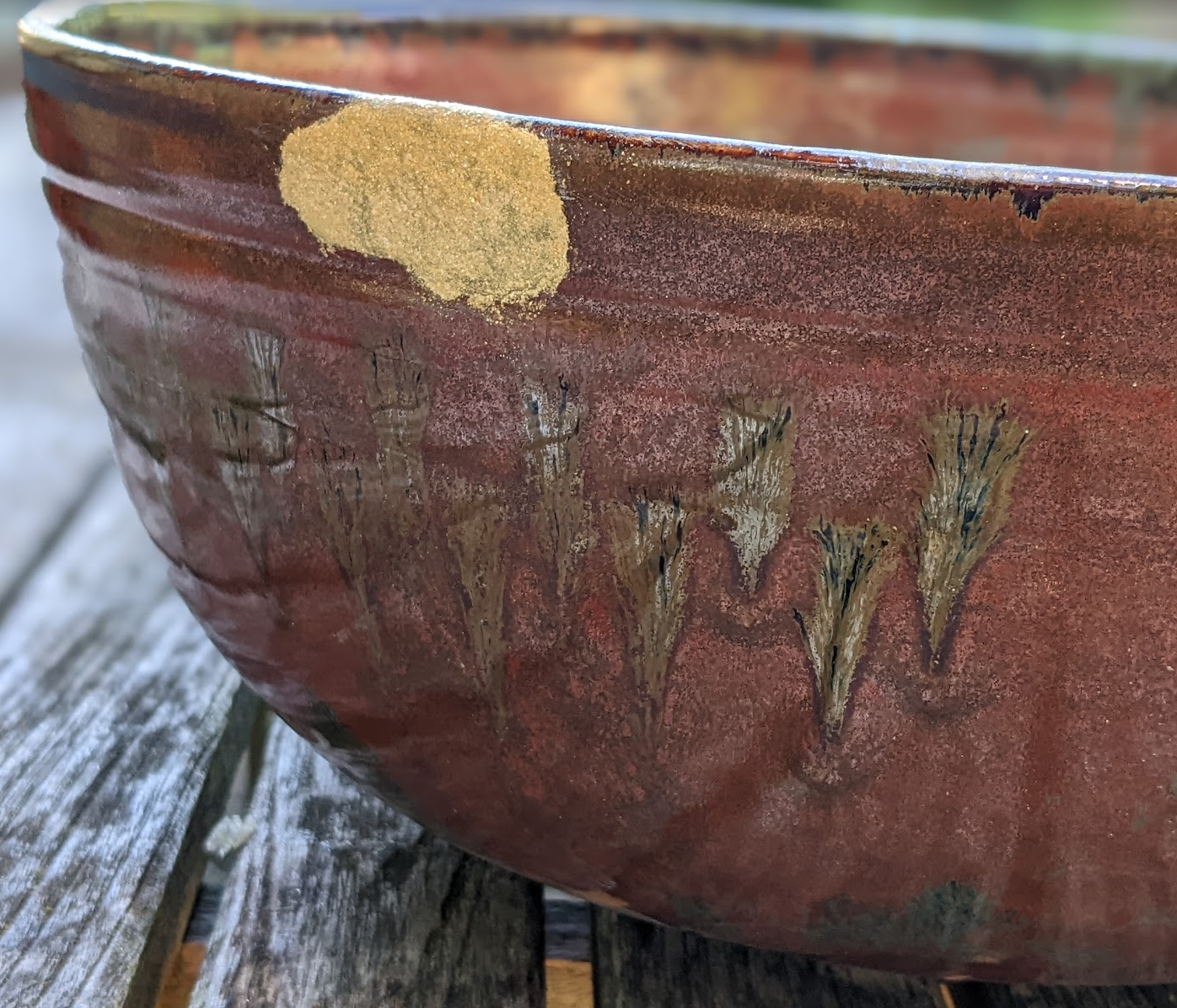
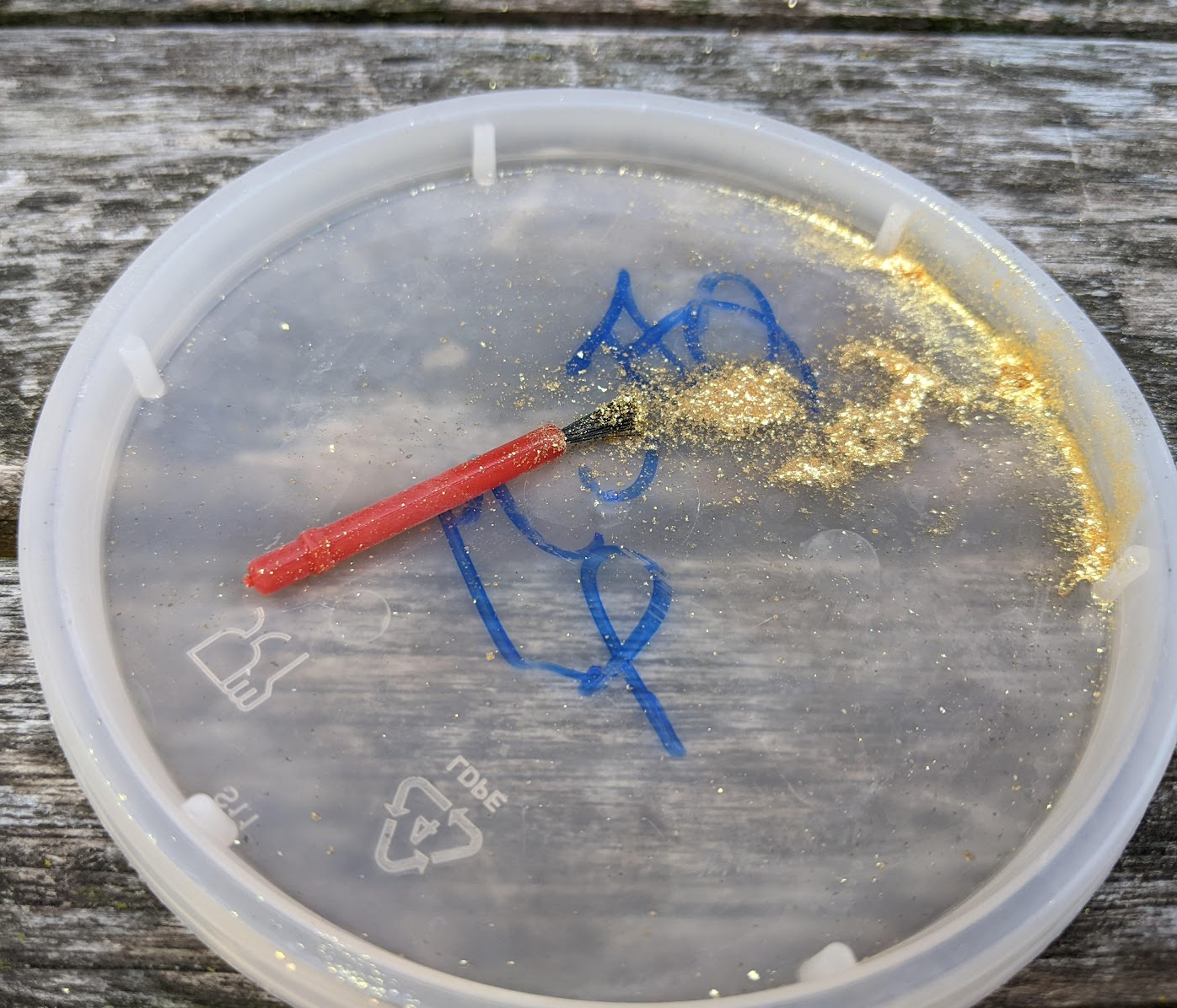
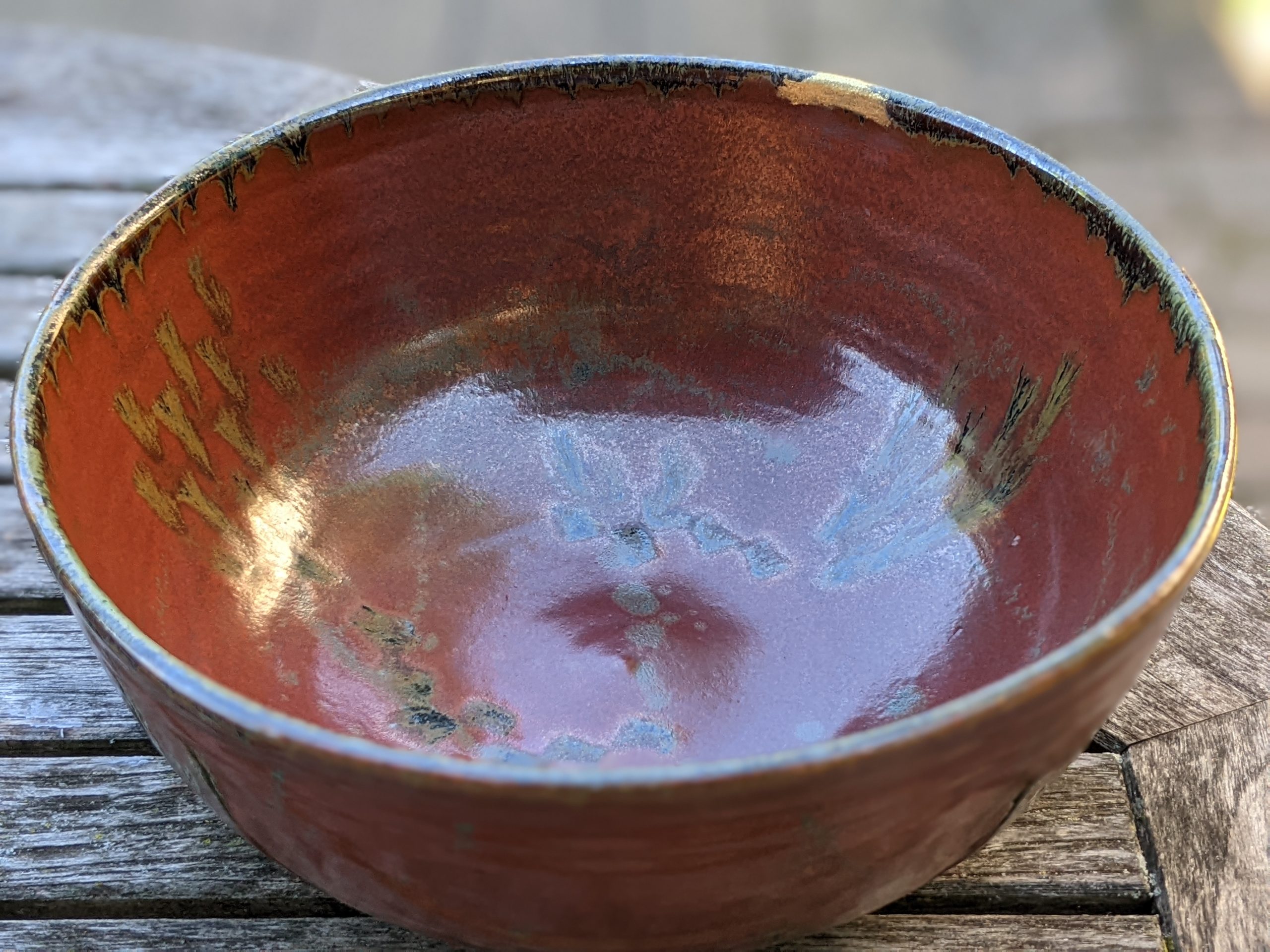
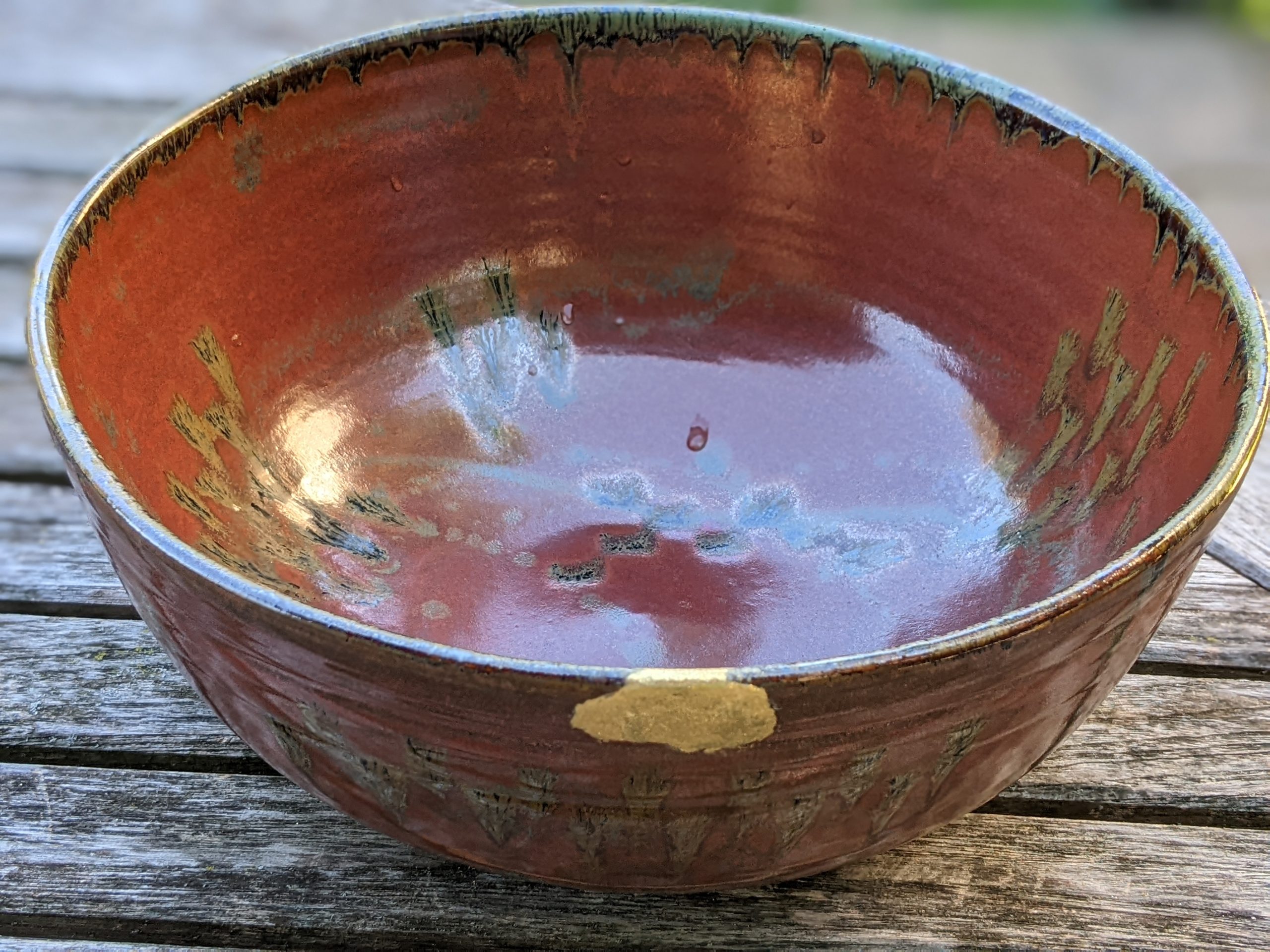
For Ann Arbor folks: I have bundled all the materials needed for this – JB Weld epoxy and mica dust, mostly – into a little Kintsugi kit that I lend out (that link won’t be visible after August 2nd, then you’ll have to search it up on Meutch). Feel free to borrow it!
I’ve found this repair to be a satisfying craft that keeps on giving as it makes me happy to use this bowl and drink out of the mugs at Workantile whose handles I’ve reattached this way.

Leave a Reply